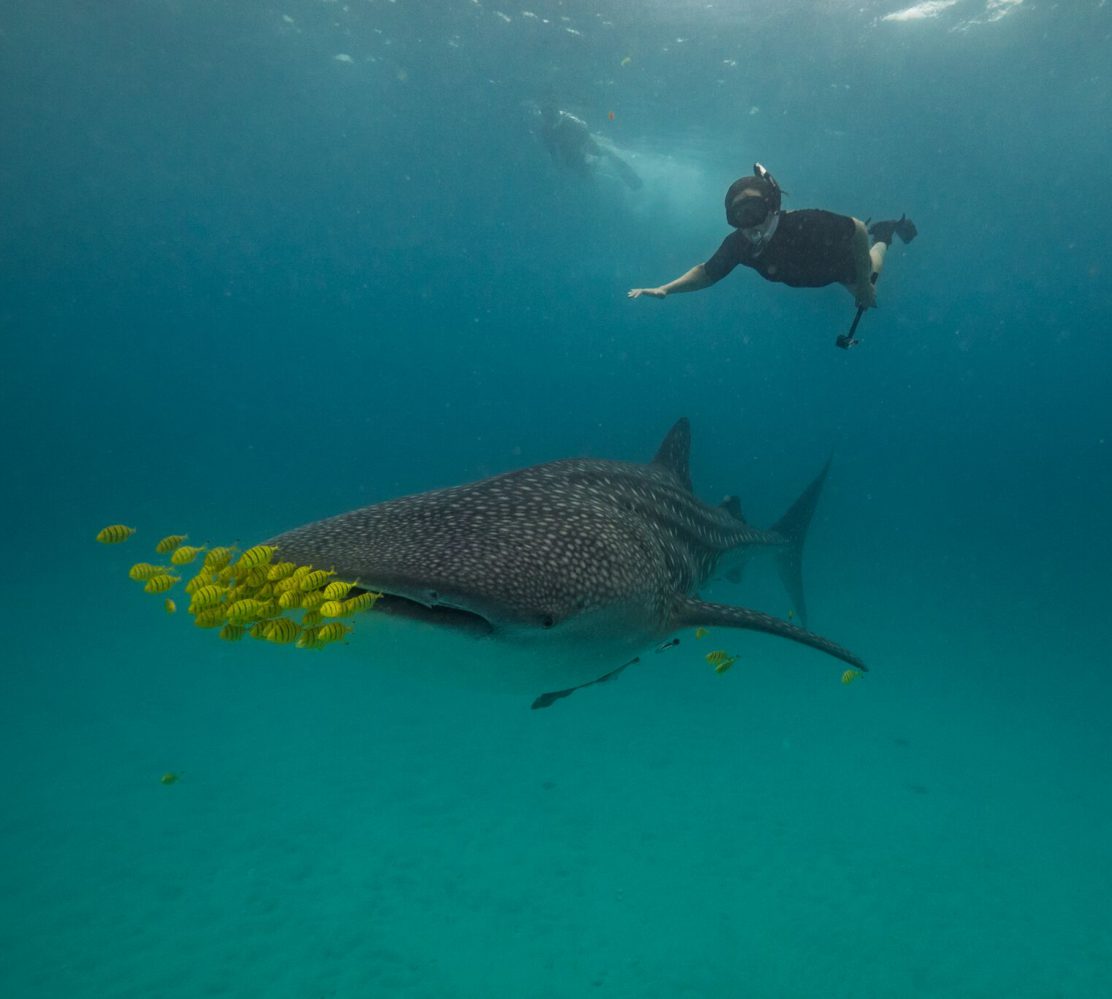

Tonight we had a really interesting talk from Chris Rohner.
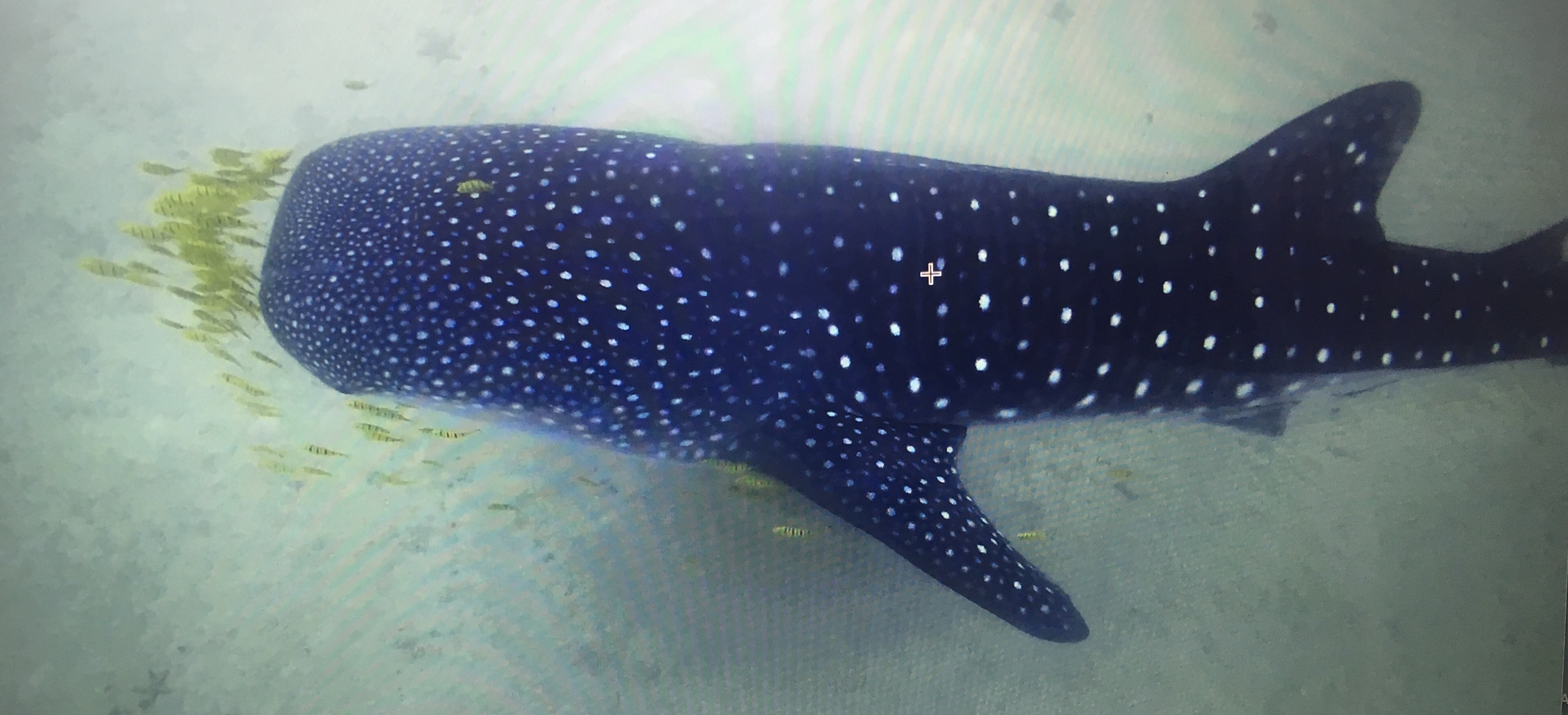 From water samples during feeding Chris and Matt have been able to identify the types of plankton consumed. This however will only give information on what the shark is feeding on right then.
From a skin sample they got more detailed information on what the shark feeds on when not at the surface. The samples show there are two types of fatty acid present;
Omega 3 – From the Plankton including copepods, fish eggs, krill, and small fish
Omega 6 – unknown
It is thought that the Omega 6 comes from feeding in the deep scattering layer.
Sonar operators, using the newly developed sonar technology during World War II, were puzzled by what appeared to be a false sea floor 300–500 metres deep at day, and less deep at night. This turned out to be due to millions of marine organisms, most particularly small mesopelagic fish, with swimbladders that reflected the sonar. These organisms migrate up into shallower water at dusk to feed on plankton. The layer is deeper when the moon is out, and can become shallower when clouds pass over the moon.[5] Wikipedia
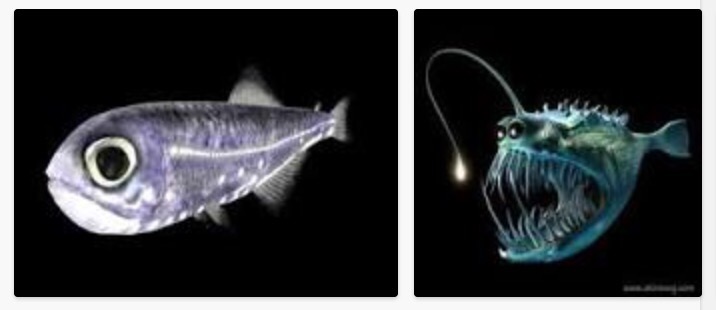
Chris found from an autopsy of a manta ray that lantern fish were present in the stomach. The fatty acids from the fish match up with the skin sample of the whale shark so it’s possible that the times we don’t see the sharks on the surface they are feeding at depths of 200m – 900m on lantern fish.
Lanternfishes (or myctophids, from the Greek mykter, “nose” and ophis, “serpent”) are small mesopelagic fish of the large family Myctophidae.
Sampling via deep trawling indicates lanternfish account for as much as 65% of all deep-sea fish biomass. Indeed, lanternfish are among the most widely distributed, populous, and diverse of all vertebrates, playing an important ecological role as prey for larger organisms. With an estimated global biomass of 550 – 660 million metric tonnes, several times the entire world fisheries catch, lanternfish also account for much of the biomass responsible for the deep scattering layer of the world’s oceans.
Wikipedia
 becdiving